THE ART OF
POUR OVER
Master the precision brewing technique that unlocks clarity, brightness, and flavors other methods simply can't achieve.
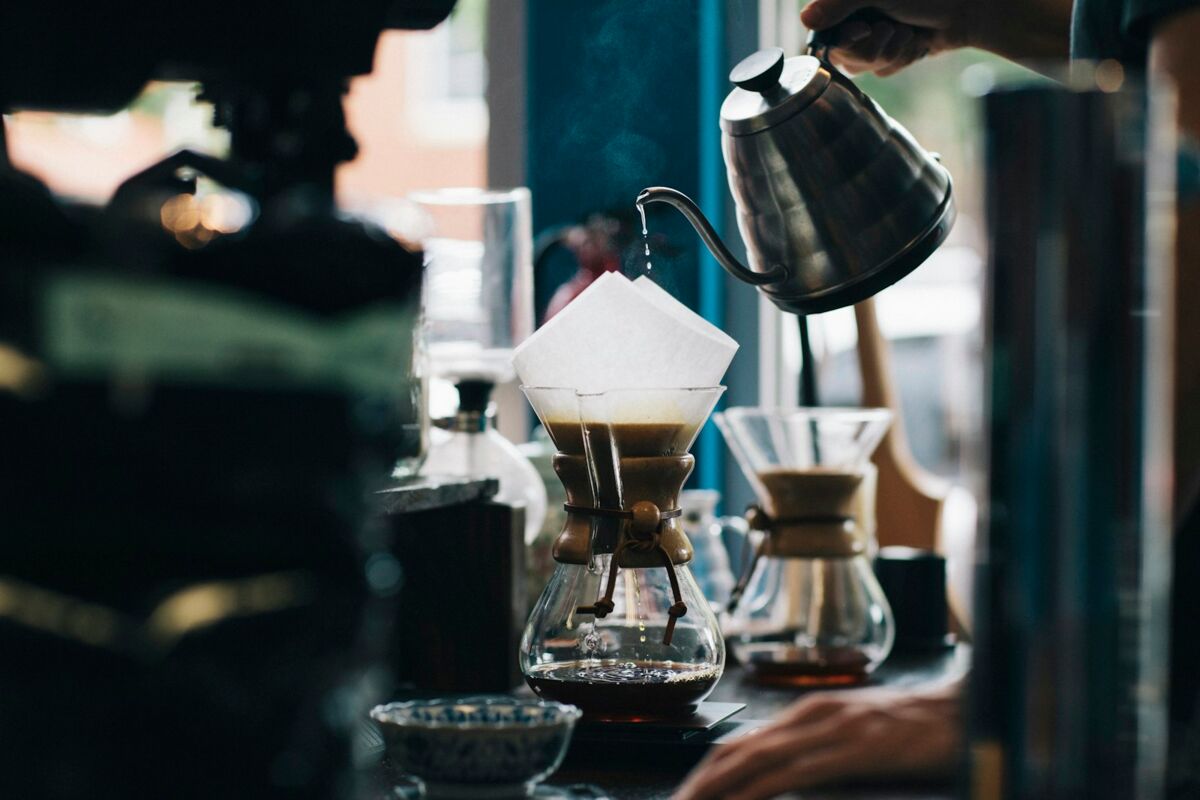
Pour-over coffee is more than a brewing method—it's a ritual. The gentle pour of water over freshly ground beans, the bloom of aromatics rising from the dripper, the anticipation as the final drops fall. Every variable is in your control.
Unlike immersion methods or pressurized brewing, pour-over gives you complete command over extraction. Water temperature, pour rate, grind size, and timing all work together to create a cup that's clean, bright, and nuanced—perfect for showcasing single-origin beans.
"WITH FULL CONTROL OVER EVERY VARIABLE, YOU UNLOCK FLAVORS OTHER METHODS CAN'T ACHIEVE."
WHAT YOU'LL NEED
Quality equipment doesn't have to be expensive, but precision matters. Here's what you need to get started:
V60 DRIPPER
The iconic cone shape with spiral ridges creates optimal water flow for even extraction.
GOOSENECK KETTLE
Precise control over pour rate and placement. Non-negotiable for serious brewing.
DIGITAL SCALE
Accuracy to 0.1g transforms guessing into precision. Look for built-in timer.
BURR GRINDER
Consistent particle size is the single most important factor in even extraction.
PAPER FILTERS
White or natural, matched to your dripper size. Rinse before use.
THE GOLDEN RATIO
coffee
water
Grind: Medium-fine
Time: 2:30-3:00
coffee
water
Grind: Medium-fine
Time: 3:30-4:00
to 96°C
Just off boil. Let the kettle rest for 30 seconds after boiling.
THE PROCESS
PREPARE YOUR SETUP
Heat water to 93-96°C. Place your filter in the dripper and rinse thoroughly with hot water—this removes any paper taste and preheats everything. Discard the rinse water. Grind your coffee fresh, aiming for a medium-fine texture like coarse sand.
BLOOM
0:00 - 0:45Add your ground coffee and gently shake to level the bed. Start your timer and pour roughly twice the weight of coffee in water (30g coffee = 60g water). Ensure all grounds are saturated. Wait 30-45 seconds—you'll see the coffee bed rise and bubble as CO2 escapes. This is the bloom.
Pro tip: Fresh coffee produces a more dramatic bloom. If your coffee doesn't bubble much, it may be stale.
FIRST POUR
0:45 - 1:15Begin pouring in slow, concentric circles from the center outward. Avoid pouring directly on the filter—keep the water on the coffee bed. Keep the slurry moving to prevent channeling. Add water until you reach about 60% of your total target weight.
SECOND POUR
1:15 - 2:00Continue pouring in gentle circles. Maintain a consistent water level—don't let it drain completely between pours. Reach your target weight (500g for two cups).
FINISH & ENJOY
2:00 - 3:30Let the coffee drain completely. Your total brew time should be around 2:30-3:30 for a single cup, 3:30-4:00 for two cups. Give the server a gentle swirl to mix, then serve immediately. Enjoy the clarity!
"SLOW, CONTROLLED POURS EXTRACT MORE EVENLY THAN FAST, AGGRESSIVE POURS."
TROUBLESHOOTING
SOUR OR WEAK?
Under-extraction
When coffee tastes sour, thin, or underdeveloped, not enough has been extracted from the grounds.
BITTER OR HARSH?
Over-extraction
When coffee tastes bitter, astringent, or unpleasantly strong, too much has been extracted.
PRO TIPS
THE BLOOM IS ESSENTIAL
Fresh coffee releases CO2 when water hits it. Let it degas for 30-45 seconds before your main pour for better extraction.
ALWAYS RINSE YOUR FILTER
This removes the paper taste and preheats your dripper for better temperature stability throughout the brew.
KEEP IT CONSISTENT
Same recipe, same technique, every time. When dialing in, adjust one variable at a time so you know what worked.
CENTER TO EDGE
Pour from the center in expanding concentric circles. This ensures even saturation across the entire coffee bed.
DON'T RUSH
Slow, controlled pours extract more evenly than fast, aggressive pours. Take your time and enjoy the process.
TASTE AND ADJUST
Your palate is the ultimate guide. Trust your taste and iterate until you find your perfect cup.
READY TO BREW?
Shop our curated selection of single-origin beans, perfect for showcasing with pour-over brewing.